

Nature's answer on microplastics
JAKARTA - The problem of microplastics has long been considered almost impossible to overcome. Plastic particles of very small size have spread to the sea, land, air, and even entered the human body. However, a recent study revealed an interesting fact, there are small animals that are secretly helping to eliminate microplastics from the environment.
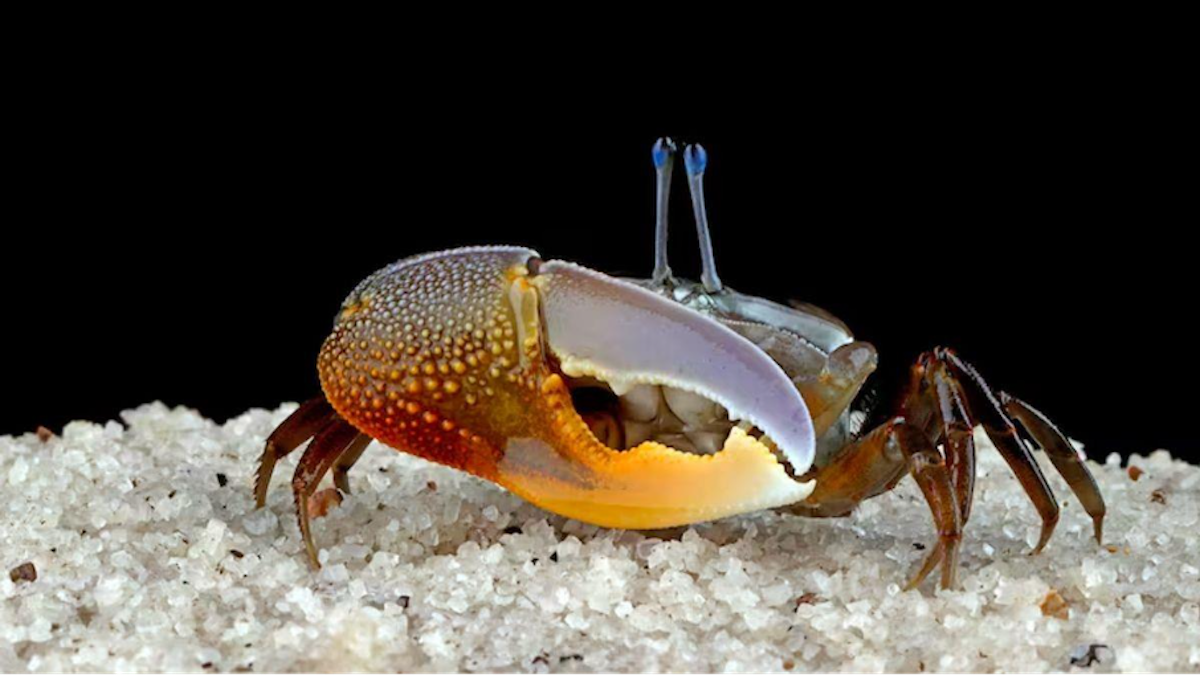
The animal is a tiny fiddler crab. Although its size is no bigger than a piece of Post-it paper, this crab is able to swallow and break down large amounts of microplastics.
The research, published in the journal Global Change Biology, was conducted in coastal mangrove forests in northern Colombia, an area known to have very high levels of plastic pollution due to urban and agricultural activities. In the midst of this damaged environment, the violin crab was found to be thriving.
"These crabs indirectly play a role that has not been realized in cleaning the environment," said the study's lead researcher, Professor José M. Riascos, quoted from the Euro News page.
In this study, a team of scientists observed how violin crabs interact with microplastics in their natural habitat. The researchers sprayed fluorescent micro-plastic particles into a mangrove area, then monitored their movement for 66 days.
The results were surprising. Microplastics were found to accumulate in the crab's body with a concentration 13 times higher than in the surrounding sediment. The particles were most commonly found in the hindgut.
"We want to know if the interaction of crabs with microplastics is only limited to swallowing, or actually breaking it into smaller parts," explained Riascos.
Violin crabs not only eat microplastics, but also destroy them. The crab's digestive system, which is capable of grinding food, coupled with special bacteria in the gut, is thought to play a role in the process of breaking down plastics. This process takes place much faster than natural decomposition by sunlight or ocean waves.
Although these findings give a glimmer of hope, researchers warn of potential risks. Fragmented microplastics can turn into nanoplastics, particles that are much smaller and potentially more dangerous.
"This ability may have downstream impacts, such as the release of nanoplastic into the crab's body tissues and then into the food chain," the researchteam wrote in its report.
This finding shows that nature often has its own way of adapting to the damage created by humans. The violin crab, a small creature that often goes unnoticed, plays an important role in maintaining the ecosystem by helping reduce plastic pollution.
Even so, scientists insist that the ability of these animals is not an excuse to relax efforts to reduce plastic waste.
"Violin crabs are not a single solution to the global microplastic crisis. Reducing plastic use remains the most important step. This study at least reminds us that big changes sometimes start with the smallest creatures," said Riascos.
Plastic pollution will not stop on its own. That is why we remain committed to reducing plastic production, raising awareness, and promoting strong legislation. Would you like to contribute to a world without plastic pollution? Share our knowledge and support our work. Together, we can make a difference.
Discover what you can do today.
.png)


.png?version=18998&width=600)
.png?version=18887&width=600)