

.png?version=18998)
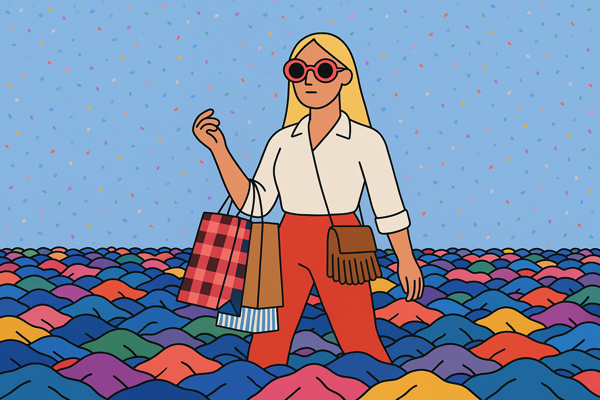
When you think of clothing, you immediately think of shopping, bargain hunting, looking good, keeping up with the latest fashion trends, or perhaps not. You probably don't know how much clothing there actually is. There is already enough clothing on the shelves to last the next six generations. In short: too much to wear.
The most sustainable piece of clothing is the one you already own.
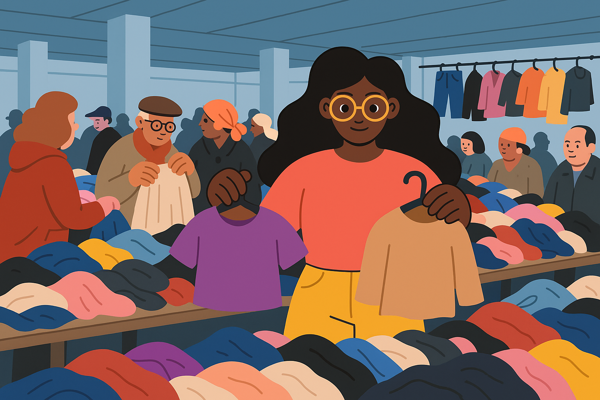
Research by the Amsterdam University of Applied Sciences has shown that the average wardrobe in the Netherlands contains no fewer than 50 unworn items of clothing. Does this sound familiar? And yet we are all buying more and more clothes and throwing them away faster and faster. This has resulted in a huge mountain of clothing waste.
If you do decide to throw away clothes, don't put them in the trash! That's a waste of clothing and raw materials. Instead, wear what you have and take good care of it. Appreciate it, maybe wash it less often. That way, it will stay beautiful longer and you'll also flush fewer microplastics down the drain. Repair it and offer what you no longer use at a clothing swap, for example. And, as a last resort, put it in a closed bag in a textile container. Because clothing is not waste.
Natural vs. synthetic materials
Clothing is made from natural and synthetic materials. Since 2000, more and more of our clothing has been made from synthetic materials such as polyester, nylon, and acrylic. Natural materials include cotton and wool. Synthetic materials are usually produced from raw materials such as oil or shale gas and are simply plastic.
Because synthetic materials are produced from non-renewable fossil raw materials, they have a negative impact on our environment. The extraction of these raw materials and the production process lead to significant greenhouse gas emissions, which contribute to climate change. Moreover, they are not biodegradable: plastics never break down and are forever present.
Currently, just over 70 percent of our clothing is made from polyester, and this percentage is only increasing. This is partly because it is cheaper than natural materials. But who pays the real price for this? In short, before you go shopping for something new, it might be a good idea to take a look at what you already have and see if you can be just as happy with fewer new clothes.
[1] At Plastic Soup Foundation, the focus is not on recycling but on informing the general public, translating complex reports into understandable language, and making a structural impact by turning off the plastic tap. Support us.
[2] Daniëlle Schouten is working to bring about change. Her mission is to encourage us to look at our clothing differently; can we do things differently? She has already planted many seeds among young and old alike.
.png)