

Who is Jeanette Smiemans?
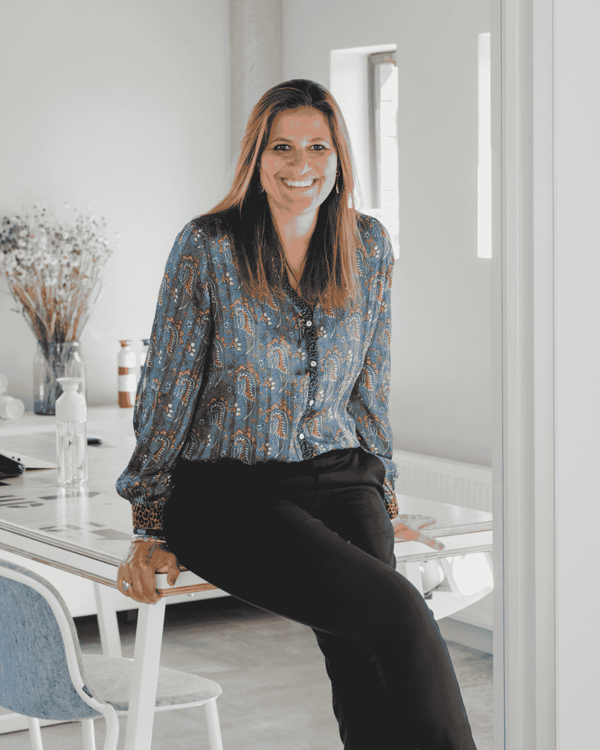
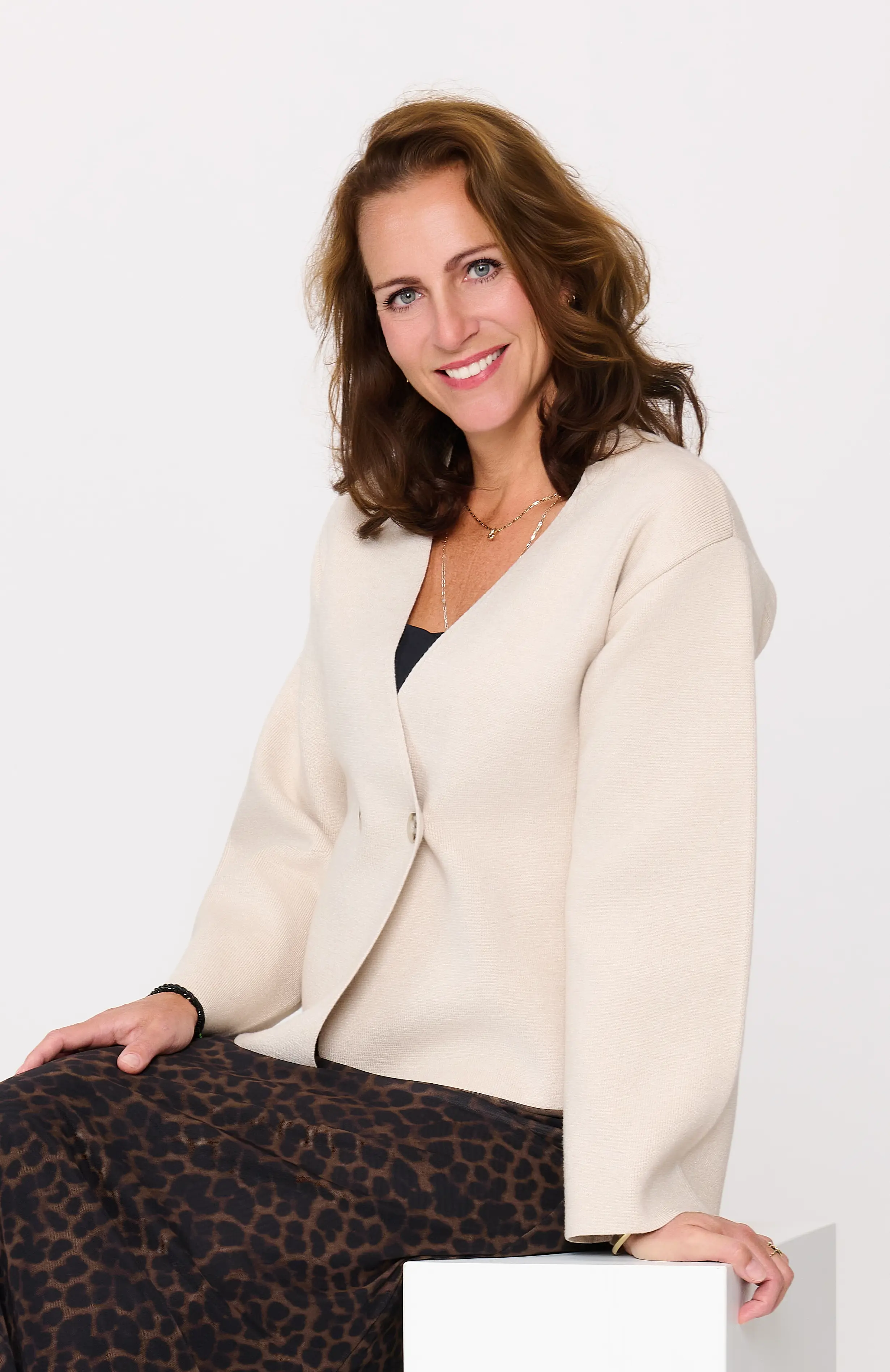
I am Jeanette Smiemans, founder of ReBloom Care. Since the start, I have been responsible for the entire development of the brand: from product development and positioning to sales, marketing and day-to-day operations.
Entrepreneurship is in my blood. I grew up with parents who worked in plastic recycling and ran a greengrocer's shop. As a child, I already dreamed of entrepreneurship: “If only I had an idea.” That idea finally came to me one evening in the bathroom. When my job ended, space was created. Space to turn that frustration about plastic toothpaste tubes into something constructive. For me, ReBloom Care never felt like a hobby, but like something I had to build.
For the first year and a half, I ran the company largely on my own. That meant learning and doing everything myself: customer service, product innovation, (email) marketing and administration. That breadth suits me and my way of working: switching gears quickly, making choices and always reasoning from the perspective of the product and the user. My background in product development and sales within e-commerce and FMCG helps with that.
Since April 2025, Fleur Groen has been working with me and is responsible for finance, operations and the oral care channel, among other things. After a year and a half of building, it is incredibly valuable to be able to divide tasks and keep each other sharp. It provides peace of mind, focus and space to allow ReBloom Care to continue to grow in a focused and healthy way.
Can you briefly tell us about your company?
ReBloom Care has been officially in existence since January 2024. The first products were launched in April of that year. The idea originated in 2023, after I left my job, from a very specific frustration: plastic toothpaste tubes. Frustration is a good motivator for systemic change. Toothpaste tubes are difficult to empty, poorly recyclable and often contain ingredients (including microplastics) that I didn't want to put in my children's mouths.
I thought: there must be a better way. More attractive, more sustainable and with more attention to health. ReBloom Care now consists of a goal-oriented duo, with a strong network of specialists around us.
I thought: there must be a better way. More attractive, more sustainable and with more attention to health. ReBloom Care now consists of a goal-oriented duo, with a strong network of specialists around us.
What is your company doing to reduce its global plastic footprint?
We have fundamentally redesigned toothpaste packaging. This is not a marketing ploy, but design thinking: starting with the problem and only then moving on to the product. Traditional toothpaste tubes are difficult to empty, poorly recyclable due to the combination of plastic and aluminium, and for many people, an eyesore in the bathroom.
How do you see the future in this area?
To be honest, I sometimes find it bleak. That is precisely why the work of the Plastic Soup Foundation is so important: raising awareness and applying pressure where systemic change is needed. At the same time, I believe in individual steps. If everyone does a little better, it will have a collective impact. Entrepreneurs have a key role to play in this by addressing pain points where there is still much to be gained in terms of plastic impact.
How do you see the balance between CO₂ reduction and attention to plastic pollution?
CO₂ reduction and plastic pollution are often approached separately, while in practice they come together in design choices. In my opinion, a solution that saves CO₂ but leaves behind microplastics is not a real solution. We need to learn to look at the bigger picture: material use, lifespan, reusability and waste streams. This sometimes requires more complex decisions, but they are fairer ones.
There are alternatives, such as toothpaste tablets, which are an interesting innovation, but in practice give many people an unpleasant feeling in their mouths. A truly refillable liquid toothpaste did not yet exist. That is precisely where ReBloom Care came into being.
There are alternatives, such as toothpaste tablets, which are an interesting innovation, but in practice give many people an unpleasant feeling in their mouths. A truly refillable liquid toothpaste did not yet exist. That is precisely where ReBloom Care came into being.
ReBloom Care uses glass bottles with a pump. One bottle replaces an average of two traditional toothpaste tubes. When the bottle is empty, it is refilled with a refill pack equivalent to four tubes. Glass is sustainable, hygienic and timeless, while the pump ensures waste-free dispensing, something that makes a surprising difference in everyday use.
The result is significantly less plastic and much less product loss. On average, around 12 ml of toothpaste remains in a tube when it is thrown away. With four tubes, that is 48 ml. Our refill leaves only 1.2 ml of residue.
The refill packaging is made of thin plastic without an aluminium layer, which makes recycling easier. In total, this saves us approximately 89% in CO₂ emissions compared to conventional plastic tubes. In this way, we are making an everyday activity structurally more sustainable, without compromising on ease of use.
Why do you think it is important to work on this?
We only have one planet, that much is obvious. But for me, the urgency lies mainly in people's everyday behaviour. Major environmental problems rarely arise from a single conscious wrong choice, but from small actions that we repeat thoughtlessly every day.
That is precisely why I strongly believe in the power of ease of use as a driver of behavioural change. When a product is frustrating, people give up or choose the quickest, often least sustainable option. If you remove that friction, better behaviour becomes self-evident.
Research shows that many people are bothered by toothpaste tubes: caps that get lost, residue that doesn't come out of the tube and the garish design that doesn't fit in the bathroom. These are seemingly minor irritations, but they influence how people interact with the product.
By removing this friction, brushing your teeth becomes a more pleasant and peaceful moment. And those who brush with more attention brush better. This has a direct effect on oral health, especially in combination with a toothpaste without unnecessary or potentially harmful ingredients. In this way, a better user experience not only leads to less plastic and waste, but also to more sustainable behaviour in the long term.
What do you like most about sustainable entrepreneurship?
The responses from customers and the network that is created. We receive a remarkable amount of positive feedback, not only about the product but also about the idea behind it. We often ask ourselves: why do people follow a toothpaste brand on Instagram in their spare time? The answer lies in recognition. People feel that this is not greenwashing, but a sincere brand that wants to do better. 'Very handy to use, no mess with caps and plastic bottles. And, not unimportantly, it looks good in the bathroom and is a lot more sustainable,' says customer Alice.
What advice do you have for other entrepreneurs who want to become more sustainable?
Sustainability alone is no longer a distinguishing factor. People don't buy sustainable products, they buy an experience. Sustainability has become a prerequisite. My advice: look for solutions that actually make consumers' lives more enjoyable or easier. If you succeed, the sustainable impact will follow naturally. Start with the product, not the communication.
What do you personally do to reduce your plastic footprint?
I try to keep it practical. I always use the Plastic Free Future app to scan care products for plastic. At home, we use glass containers and metal lunch boxes, I always take a shopping bag with me and I don't buy everything new. We make the same choices in business: bamboo toothbrushes, paper bags, wooden POS materials, paper tape and paper filling materials in our shipping boxes.
What sustainable tip do you often give to people around you?
In addition to ReBloom Care, I often recommend the Plastic Free Future app to people. It makes an abstract problem surrounding plastics concrete and helps people make better choices right away.
How do you see the future in this area?
To be honest, I sometimes find it bleak. That is precisely why the work of the Plastic Soup Foundation is so important: raising awareness and applying pressure where systemic change is needed. At the same time, I believe in individual steps. If everyone does a little better, it will have a collective impact. Entrepreneurs have a key role to play in this by addressing pain points where there is still much to be gained in terms of plastic impact.
How do you see the balance between CO₂ reduction and attention to plastic pollution?
CO₂ reduction and plastic pollution are often approached separately, while in practice they come together in design choices. In my opinion, a solution that saves CO₂ but leaves behind microplastics is not a real solution. We need to learn to look at the bigger picture: material use, lifespan, reusability and waste streams. This sometimes requires more complex decisions, but they are fairer ones.
What do you think is the biggest misconception about sustainability?
That sustainability is something for world leaders and large companies. Change actually comes from entrepreneurs, designers and consumers who dare to make different choices.
What do people really need to know about plastic pollution?
That plastic does not disappear. It breaks down into smaller and smaller particles and remains present in our ecosystems, our water and ultimately our bodies. It also depletes our raw materials. The problem is often underestimated because it is not immediately visible.
Where do you see yourself in 5 to 10 years in terms of sustainability and plastic footprint?
In five to ten years, toothpaste from a refillable bottle will be the norm. No one will want to squeeze tubes and throw them away anymore.
ReBloom Care will then be a top 5 brand in Europe, with a strong team and a clear mission: to make everyday products smarter, more beautiful and more sustainable.
_(2).png)

_(1).png)

.jpg?version=19610&width=600)