

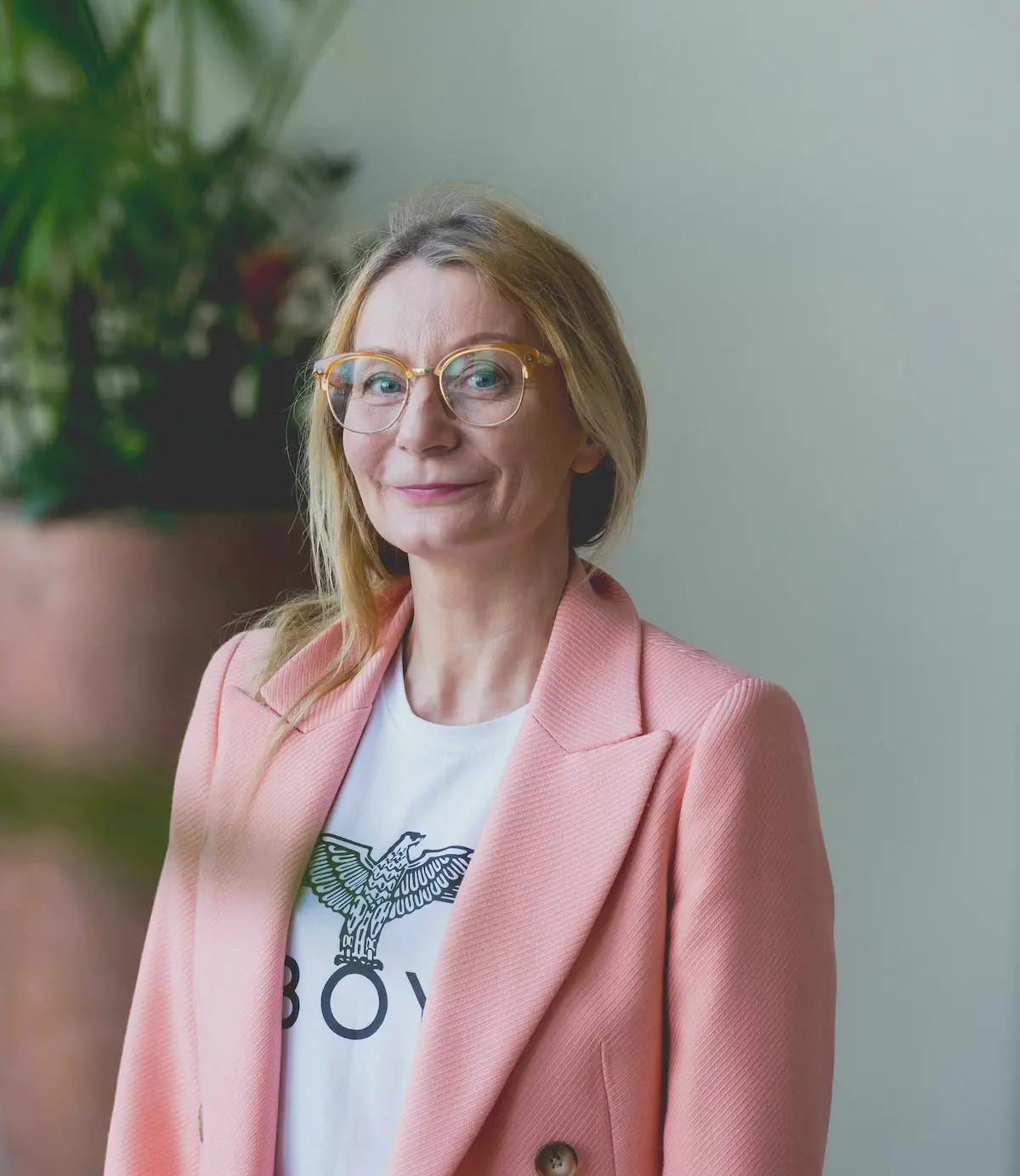
Who is Jo Chidley?
I’m a systems thinker disguised as a beauty entrepreneur. Together with my husband and co-founder, Stuart, I founded Beauty Kitchen over a decade ago with a simple frustration: why are we still designing products for the bin?
From the beginning, our work has been partnership-led, challenging each other, testing ideas, and staying close to the operational reality of what change actually requires.
Today, alongside Beauty Kitchen, I lead Reposit a return-led reuse system because we realised that if we want to reduce plastic pollution, we have to redesign the system, not just the packaging.
At heart, I’m interested in how business when built collectively and intentionally can become a vehicle for regeneration rather than extraction.
Can you briefly tell us something about the history of your company?
Beauty Kitchen began as a small, purpose-led beauty brand in Scotland, focused on natural formulations and responsible sourcing. But very quickly, packaging became the elephant in the room.
We realised that switching materials wasn’t enough. Recycling wasn’t enough. “Less bad” wasn’t enough.
That led us to develop Reposit a return-led reuse infrastructure that allows packaging to be collected, washed, and put back into circulation at scale.
Over time, this grew beyond our own brand into a system that other brands could use because systemic change can’t happen alone.
What does Reposit / Beauty Kitchen do to reduce the global plastic footprint?
We focus on eliminating the single-use nature of packaging.
Instead of selling packaging once and hoping it gets recycled, we design durable packaging to be returned, professionally cleaned, and reused multiple times.
Every return extends the life of that material and avoids new virgin plastic production.
We are building the infrastructure and shared standards required to make reuse normal not niche.
Why is this so important?
Plastic pollution is not just a waste problem it’s a systems failure.
Plastic has no ecological limits once it escapes into the environment. It accumulates, fragments, and persists.
If we continue designing for single use, we will always be managing the consequences rather than preventing the problem.
Reuse addresses plastic pollution at source by keeping materials in controlled loops rather than letting them go rogue.
What do you like most about sustainable entrepreneurship?
What I value most is that it forces you into the uncomfortable, messy parts of business.
When you genuinely try to reduce your plastic footprint, or redesign a system, you very quickly realise there are no neat answers. Supply chains are complex. Infrastructure is missing. Financial models don’t fit. That tension is where the real work happens.
For me, sustainable entrepreneurship isn’t about being creative or collaborative for the sake of it. It’s about execution. It’s about embedding standards like B Corp into the governance of the company so that intention becomes structure. It’s about working within a theory of change that recognises interdependence: that business, communities and ecosystems are linked.
I’m motivated by solving problems that don’t yet have a clear pathway, and by staying with them long enough to build something practical not just aspirational.
What advice would you give other entrepreneurs who want to become more sustainable?
First, decide what you are really prepared to change.
It’s easy to adopt the language of sustainability. It’s much harder to let it influence your financial decisions, your sourcing, your product design, and your growth model.
Frameworks like B Corp are useful because they move sustainability from marketing into governance. They force you to measure, to report, and to improve against a recognised standard. That discipline matters.
Secondly, understand that system change requires collective action. You cannot redesign infrastructure alone. If your ambition is systemic for example, eliminating single-use packaging you will need competitors, retailers, policymakers and financiers around the table.
And finally, accept that you will get things wrong. Progress in this space is iterative. What matters is whether your direction of travel is honest and aligned with the outcomes you claim to care about.
What do you personally do to reduce your plastic footprint?
Most of us grew up in a largely non-digital world. We had to wait for things. It was inconvenient but that inconvenience built patience, repair skills, and problem-solving.
Since the 1990s, global plastic production has more than quadrupled. That growth reflects systems optimised for speed and throughput.
Single-use systems are highly optimised for cost and velocity yet they are not optimised for ecological stability, material longevity, or intergenerational resilience.
In complex systems, friction isn’t failure it’s feedback. Remove it entirely, and instability follows.
So the question I find more useful now is:
When does optimisation erode the very system it is trying to improve?
At home, that sometimes means choosing friction over speed repairing instead of replacing, returning instead of discarding not as symbolism, but as a small alignment with resilience rather than velocity.
The shift is away from footprint accounting and toward behavioural alignment with resilience, reciprocity and system integrity a clearer understanding of cause and effect in everyday actions.
What simple sustainability tip do you often share with others?
Rather than asking, “Is this recyclable?”, ask, “Was this designed to be single use?”
Recycling manages consequences. Reuse redesigns the system.
That shift from managing waste to questioning design changes the level at which you engage with the problem.
What’s your vision for the future in this area?
I want reuse to become infrastructure something embedded into everyday systems, not an optional extra or a lifestyle choice.
In ten years’ time, I would like my children to grow up in a world where returning packaging is normal, where single-use feels outdated rather than convenient, and where businesses are measured not just by growth, but by how well they operate within ecological limits.
That future won’t come from individual behaviour change alone. It requires collective action standards, shared infrastructure, aligned finance and governance.
My hope is that we move beyond debating materials and start redesigning systems at scale, so that sustainable behaviour is the default, not the exception.
What’s your view on the focus on CO₂ reduction versus plastic pollution?
They are not competing issues they are structurally linked.
It is not the material alone that drives emissions, but the single-use model underpinning it. Systems designed for throughput require continuous extraction, continuous production and continuous disposal and that drives carbon intensity.
Plastic production has grown in parallel with fossil fuel expansion because it is fundamentally tied to that feedstock. But even beyond plastic, any material designed for single use will carry repeated carbon costs.
The deeper issue is systems that allow materials to go rogue escaping economic loops and ecological boundaries. When we design for durability, return and reuse, we reduce both material leakage and embedded carbon.
So rather than choosing between CO₂ reduction and plastic pollution, the more accurate lens is redesigning single-use systems that generate both emissions and ecological instability.
What’s the biggest misunderstanding about sustainability you’d like to correct?
That it’s primarily a materials question.
We tend to debate plastic versus paper, recyclable versus compostable when the deeper issue is the single-use model driving extraction, production and disposal.
If we optimise materials but leave the throughput model intact, we simply shift impacts rather than reduce them.
Sustainability is ultimately about system design and interdependence not material substitution.
What do people really need to know about plastic pollution?
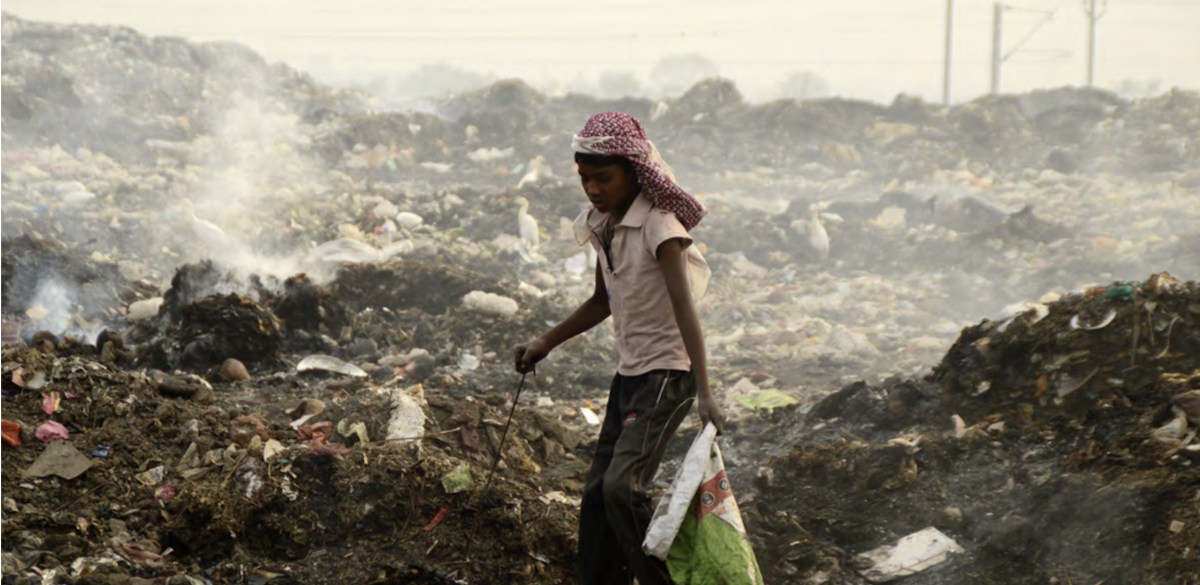
Nearly every piece of plastic ever produced still exists somewhere on the planet.
Since the 1950s, more than 9 billion tonnes of plastic have been manufactured. Around 79% of that has accumulated in landfills or the natural environment, about 12% has been incinerated, and only around 9% has ever been recycled.
Plastic doesn’t disappear. It fragments. It moves through water, soil and air. It enters food chains and persists across generations.
This is not just a waste management issue it is a materials legacy issue. Every decision to produce single-use plastic adds to a stock that future generations must manage.
What are your goals for the next 5–10 years, specifically around plastic footprint?
To move reuse from pilot projects to infrastructure.
That means proving with data that return-led systems can operate at scale, align with finance, and reduce both material leakage and embedded carbon.
It also means continuing to build collective frameworks that restore interdependence into business models, so that durability and resilience are not niche but normal.