

- Landmark report warns of plastic exposure from overlooked sources including healthcare, everyday products and emerging technologies
- Leading scientist describes a "microplastic storm" driven by poorly understood exposure pathways
- Consumers can lower exposure through lifestyle changes and buying plastic-free alternatives
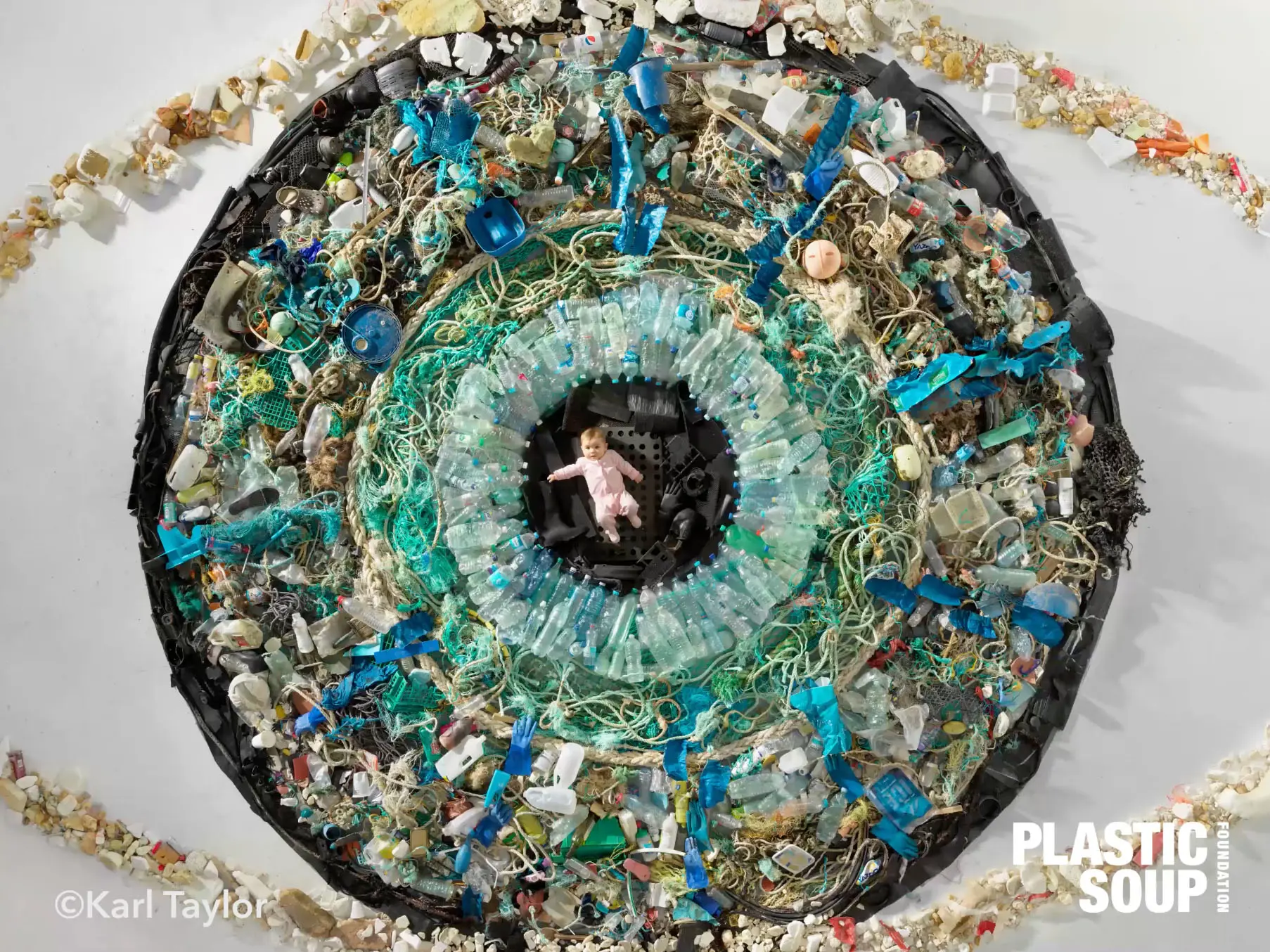
TODAY a new major report highlights the vast scale of microplastic exposure in daily life in what experts are calling a “microplastic storm” from overlooked and emerging sources.
Funded by Plastic Soup Foundation and The Flotilla Foundation, Exploring Everyday Microplastic Exposures, the first-of-its-kind report draws on over 350 peer-reviewed studies and concludes that human exposure is continuous and global.
The findings lay bare an exposure crisis through mapping microplastic release across five categories of everyday life: outdoor sources, indoor environments, children’s products, healthcare and personal care, and food and drink.
By highlighting a continuous flow of particles generated from overlooked and emerging sources the report reframes the plastics crisis as a systemic exposure issue embedded across modern society.
Among the report's most striking findings is evidence that emerging climate interventions could make microplastic exposure significantly worse.
For example, stratospheric aerosol injection - a form of solar geoengineering being advanced by countries including the United Kingdom and United States - involves dispersing vast quantities of particles high into the atmosphere.
Multiple patents already exist describing the release of particles including micro sized polymeric particles at altitudes of up to 20 km in the atmosphere, creating a potentially ‘tera scale’ source of intentionally added airborne microplastics and fallout.
The research identifies that rainfall already contains microplastics with wear and tear from car tires and synthetic textiles and clothing contributing to atmospheric pollution.
In hospitals, plastic particles may be introduced into the body via devices and treatments, with microplastic fallout in operating rooms recorded at up to 9,258 particles per square meter during a single shift. Cardiac catheters, silicone breast implants, orthopedic implants or intravenous fluid all cited as sources with the potential of inadvertently dosing patients with microplastics.
Startlingly, premature babies fed intravenously in neonatal units are estimated to receive up to 115 microplastic particles over a 72-hour feeding period from the infusion circuits alone. Baby formula intake exposes babies to microplastics at levels from <1 to 17 microplastics per gram formula with packaging types playing a role in releasing the observed microplastics.
Children's products are also of significant concern - building bricks, baby play mats and other products for children releasing PET, polypropylene, polyethylene and PVC into a child’s living environment. As children naturally ingest more settled dust during play and breathe in more air per kilogram bodyweight, their exposure is proportionally higher than adults.
Another unexpected indoor exposure is via paint. Plastic is the main component of many paint products and such paint emit microplastics when it wears down or when old layers are scraped off. A single coat applied across 100 square meters is estimated to contain between 17 and 68 quadrillion polymeric particles.
Maria Westerbos, Founder of Plastic Soup Foundation, said: "This report highlights the hidden reality of plastic in our lives. Many people still think of plastic pollution as something that affects oceans and beaches, not their own health. But our living environments themselves are microplastic generators, and exposure is happening all the time, in ways most people have never considered.
“This doesn't have to be a story of helplessness. Understanding where exposure comes from empowers people to make more informed choices about the products they use and to demand more from the governments and industries responsible for putting those products into our lives."
Dr Heather Leslie, author of Exploring Everyday Microplastic Exposures, said: "Exposure is happening all the time, not only from products we recognize, but from systems and processes that most people would never consider. This is not just about waste or environmental pollution, it is about the materials that manufacturers have built into our world, and the particles they continuously release into the spaces we live in.
“When plastic stops being the answer to almost every design question - from teabags to towels to toys and beyond - humanity can end up successfully abating the microplastic storm."
The report scopes the breadth of everyday microplastic exposure, which is one of two keys to understanding health risks - the other being causal links between microplastics and disease, a research area still in its early stages.
It aims to empower people to reduce their own exposure through individual and collective action. A key mitigation strategy people can instantly adopt in their own homes is substituting for plastic-free products.
It also calls on policymakers to adopt a precautionary principle, accelerating health impact research and prioritising mitigation over 'paralysis by analysis.'
For more information visit: www.plasticsoupfoundation.org/en/exposure-study
Ends
For more information contact:
Charlotte Dignam
charlotte@higginsonstrategy.com
+44 7472681722
Download the report: 'Exploring Everyday Microplastic Exposures' by Heather A. Leslie or Download the Summary
Notes to Editors:
- The report Exploring Everyday Microplastic Exposures was authored by independent scientist Dr. Heather A. Leslie and reviews over 350 peer-reviewed studies examining human exposure to microplastics and focuses on external exposure pathways rather than direct health outcomes.
- About Dr. Heather A. Leslie: Dr Heather Leslie is an internationally recognised scientist specialising in plastic and chemical pollution, whose major discoveries include the first discovery of microplastics in the human bloodstream. With over 25 years of experience in measuring environmental contaminants, assessing risks, and translating science into practical solutions, she has held senior scientist and lecturer roles at leading Dutch universities, including the University of Amsterdam, Utrecht University, Wageningen University & Research, and Vrije Universiteit Amsterdam. In 2024, she founded Heather Leslie Projects, a scientific consultancy advising organisations on pressing pollution challenges. http://www.heather-leslie.com/
- Microplastics are defined in the report as plastic particles smaller than 5 mm, including nanoplastics, which are particles smaller than 1 micron.
- The report notes that while analytical uncertainties remain in some datasets, the volume and consistency of evidence across studies is sufficient to firmly reject any hypothesis that humans are unexposed to microplastics via their everyday products.
- The report was commissioned by Plastic Soup Foundation, a Netherlands-based NGO working to eliminate plastic pollution and its impact on human health.
.png)