
Leading scientist Heather Leslie highlights the vast scale of microplastic exposure in daily life. Her research on over 350 peer-reviewed studies shows that human exposure is continuous and global.

EN
The findings of this study lay bare an exposure crisis, that experts are calling a “microplastic storm”.
Heather Leslie maps microplastic release across five categories of everyday life: outdoor sources, indoor environments, children’s products, healthcare and personal care and food and drink.
This research and related work are funded by the Plastic Soup Foundation and the Flotilla Foundation. Help fund urgent research with a donation.

For example, stratospheric aerosol injection - a form of solar geoengineering being advanced by countries including the United Kingdom and United States - involves dispersing vast quantities of particles high into the atmosphere.
Multiple patents already exist describing the release of particles including micro sized polymeric particles at altitudes of up to 20 km in the atmosphere, creating a potentially ‘tera scale’ source of intentionally added airborne microplastics and fallout.

Dr Heather Leslie, author of Exploring Everyday Microplastic Exposures
"When plastic stops being the answer to almost every design question - from teabags to towels to toys and beyond - humanity can end up successfully abating the microplastic storm."
Maria Westerbos, founder Plastic Soup Foundation
"This doesn't have to be a story of helplessness. Understanding where exposure comes from empowers people. They can make informed choices about the products they use and demand more from the governments and industries responsible."


In hospitals, plastic particles may be introduced into the body via devices and treatments, with microplastic fallout in operating rooms recorded at up to 9,258 particles per square meter during a single shift. Cardiac catheters, silicone breast implants, orthopedic implants or intravenous fluid all cited as sources with the potential of inadvertently dosing patients with microplastics.
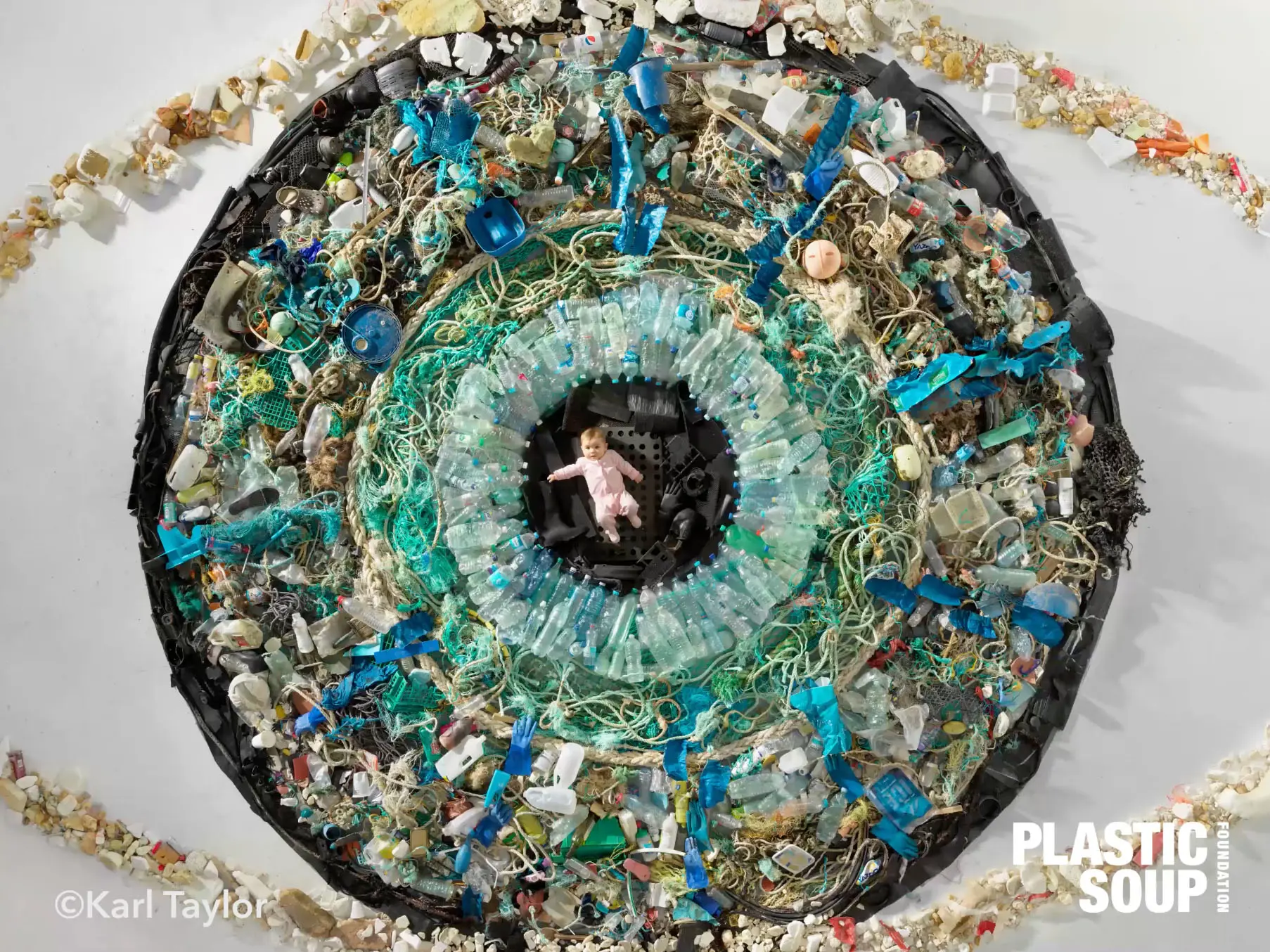
Startlingly, premature babies fed intravenously in neonatal units are estimated to receive up to 115 microplastic particles over a 72-hour feeding period from the infusion circuits alone. Baby formula intake exposes babies to microplastics at levels from <1 to 17 microplastics per gram formula with packaging types playing a role in releasing the observed microplastics.

Synthetic textiles and clothing are contributing to atmospheric pollution. Fast Plastic Fashion remains a growing problem.


© 2026 Plastic Soup Foundation