

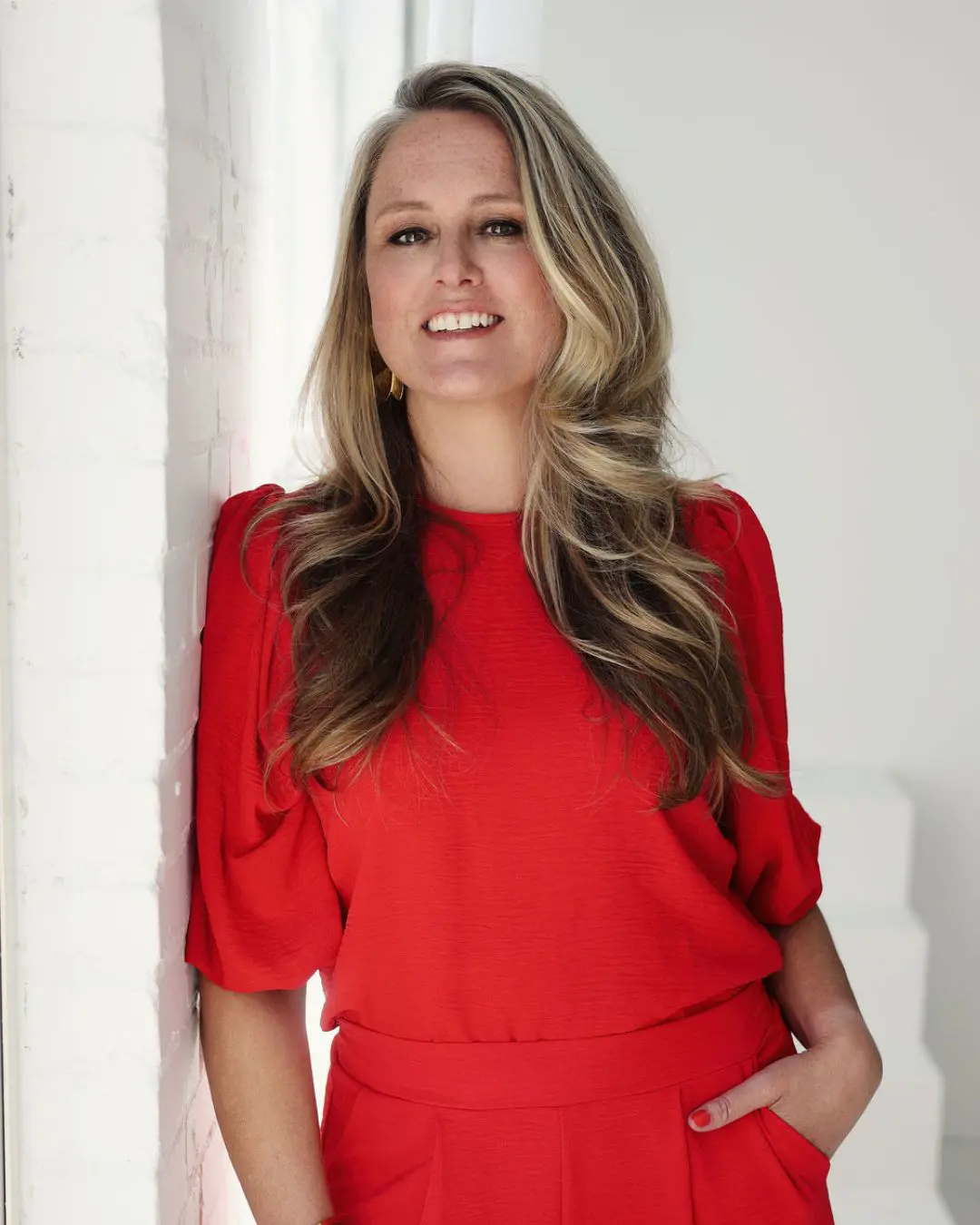
Who is Jantien Kroese-van den Berg?
In my role as CEO, I am ultimately responsible for delivering our strategic direction. This means embedding the brand promise and direction of our parent company, WALA Heilmittel (part of the WALA Foundation), which deliberately challenges the logic of overconsumption: less, but better.
This translates into choosing 100% natural ingredients, biodynamic cultivation, circular solutions, and reducing waste across everything from product to packaging. I guide the Benelux team in Hoofddorp and take responsibility for translating these values into concrete decisions, innovation, and collaboration with our partners. With over 20 years of experience in the beauty sector, I consciously use my position to connect commercial strength with sustainable impact.
Outside of work, I enjoy spending time with my family, being outdoors, walking and exercising, traveling, and enjoying life with friends and family.
Can you briefly explain Dr. Hauschka and what you do?
Since 1967, Dr. Hauschka has been developing 100% natural cosmetics, long before “natural” became the norm. Based on the belief that the skin has the ability to restore itself, we create products that do not take over, but support and rebalance.
What truly sets us apart is that we look beyond the product itself. We operate from a holistic vision in which people and nature are inseparably connected—from biodynamic cultivation and fair trade to production, packaging, and long-term partnerships. From the Foundation’s perspective, profit is not the goal, but a means to realize our mission—past, present, and future.
For us, sustainability is not a claim but an integral part of how we work: 100% natural formulas without synthetic additives, NATRUE-certified according to the strictest standards, and continuous attention to material use, recyclability, and waste prevention.
What does Dr. Hauschka do to actively reduce its global plastic footprint?
At Dr. Hauschka, we do not only focus on reducing plastic, but on minimizing waste across the entire system. We design our packaging based on four principles: minimal material use, maximum recyclability, use of recycled materials, and optimal protection of the contents.
Wherever possible, we consciously choose materials such as glass and aluminum due to their high recyclability, and we continuously reduce the use of virgin plastic by increasing the share of recycled materials. In practice, this means ongoing material reduction, increasing use of recycled plastic, and continuous packaging optimization.
At the same time, we ensure that our products themselves do not create new pollution: they contain no microplastics and are based on biodegradable ingredients.
For consumers, this is made transparent through the NATRUE label on our packaging, which guarantees the absence of microplastics and other synthetic substances. Another easy tool to verify this is the Plastic Free Future app by the Plastic Soup Foundation.
Why is this important to you?
Because we believe that people and nature are fundamentally interconnected. What we do directly impacts the world around us—and therefore ourselves.
That is why we see it as our responsibility to develop products that are not only good for the skin, but also for the planet. Our principle is simple: what we create must be able to safely return to nature without harming water, soil, or biodiversity.
For us, sustainability is not a trend, but part of who we are—almost 60 years, since the launch of Rose Day Cream in 1967.
What do you find most rewarding about sustainable entrepreneurship, and how important is it to you?
I realized that I wanted to dedicate my energy and experience to an organization with a deeper mission. What attracted me to WALA and Dr. Hauschka is that the products are developed from a holistic and sustainable philosophy: supporting the healing of both people and the planet.
At Dr. Hauschka, it is not just about beautiful products, but about a vision where skincare, impact, and sustainability go hand in hand. This includes working with medicinal plants, using a rhythmic production process without synthetic preservatives, and striving for sustainability and innovation throughout the entire value chain.
Our starting point is to give more than we take—both to the skin and to the world. This is not a side note, but the core of everything we do, always with respect for nature, people, and society.
This aligns seamlessly with my personal belief that companies today should not only be successful, but must also take responsibility for their role in the world. At the same time, the brand is in a phase of transformation, with international ambitions and the desire to further increase our impact. This dynamic requires courage, vision, and connection—values I am committed to.
Do you have tips for other entrepreneurs who want to become more sustainable?
Start from conviction. Sustainability only works when it is embedded in your strategy and decision-making, not added afterward.
Look at your entire value chain. The greatest impact is rarely in one element, but in how everything comes together—from raw materials to production and packaging. Also invest in partnerships with parties that share the same values. That is where real change happens.
Do you personally take action to reduce your plastic footprint—practice what you preach?
It starts with small, consistent choices. I always carry a reusable bag and refillable water bottle. I check ingredient lists to avoid microplastics and adjust my purchasing behavior accordingly.
I also actively involve my children, so they understand from an early age why this matters and learn to make conscious choices themselves.
How do you see the future of Dr. Hauschka in this area?
I see the future of Dr. Hauschka not only in further improving the sustainability of our own organization, but also in strengthening our role as a driver of change within the entire beauty industry.
We have both the responsibility and the opportunity to show that things can be done differently—that a brand can be successful while structurally contributing to people and nature across the entire value chain. For us, this means continuing to innovate, staying true to our origins and partnerships, and sharing our story about the impact we continue to make after nearly 60 years.
Ultimately, I want Dr. Hauschka not only to follow market developments, but to help raise the standard within the beauty sector.
How do you see the balance between CO2 reduction and addressing plastic pollution?
It is not an either-or question. It requires an integrated approach. Both CO2 reduction and reducing plastic pollution are essential, but they do not always align.
In practice, this means making continuous trade-offs. Sometimes an alternative to plastic has a higher CO2 impact, or vice versa. That is why we always assess the total impact across the entire life cycle of a product.
We believe there is no perfect solution, but there are better choices. The goal is to reduce material use, increase recyclability, and structurally lower CO2 emissions. For us, the real balance lies not in choosing between CO2 or plastic, but in designing systems and products that become smarter and more sustainable on both fronts.
What do you think is the biggest misconception about sustainability?
That sustainability is boring, unattractive, ineffective, or mainly expensive. In reality, it often requires innovation and creativity—and that is exactly where energy and growth lie.
There are many inspiring initiatives in this field, and I hope more people become curious and open to doing things differently.