


Who is Veronika Strotmann?
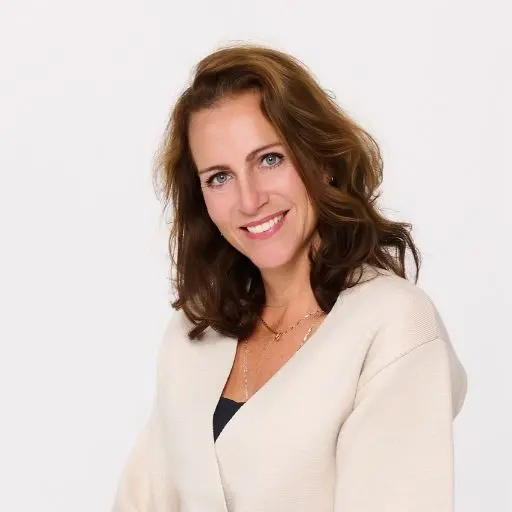
I am the Co‑Founder of Yepoda, a clean K-Beauty brand that I launched in 2020 together with my half-Korean, half-Dutch husband. As an entrepreneur, I focus on translating the innovation, routines, and ingredients of K‑Beauty into products and rituals that feel easy, and enjoyable for our customers.
I divide my time between Europe and Seoul, where we collaborate with local experts and labs – that way, I can manage to always be on top of the latest innovations and developments in the beauty space. In my role, I combine brand strategy, product development, and community building – my approach in all of this is always very customer-centric, establishing our brand as a true love brand.
Outside of work, I love traveling, discovering new cultures, and observing how people live, eat, and take care of themselves. These experiences constantly inspire me and influence the way I see beauty, helping make Yepoda’s world warm, inclusive, and genuinely curious about people.
Can you briefly tell us something about the history of your company?
We founded Yepoda after many trips to South Korea to visit Sander Joonyoung’s family, when friends in Europe kept asking us to bring back K‑Beauty products for them. Seeing how enthusiastic people were about these products, we decided to create a brand that would make Korean skincare more accessible in Europe, without ever compromising on our values.
From day one, we had a very clear idea of what Yepoda should stand for: We built the brand around five essential pillars: K‑Beauty, Clean Beauty, Sustainability, Effectiveness, and Fun. These pillars are non‑negotiable for us and guide every decision we make, from product development to communication. Our goal is to bring the best innovations from Korea to the Western world, while giving them our own twist through making them more clean and sustainable. Today, Yepoda stands for “Clean K-Beaut Innovations” – and we are super excited that our mission resonates with already more than 1.5 million customers globally.
What does Yepoda do to reduce the global plastic footprint?
At Yepoda, we focus on reducing plastic at every stage, from product design to packaging and usage.
Unfortunately, most cosmetic products today are still sold in single-use plastic packaging. Most of our products are filled in glass containers, which are designed to be reused and refilled. For products like our sheet mask and our refill pouches, we opt for other innovative packaging solutions, such as biodegradable packaging materials. Even some of our products themselves, such as our sheet masks and depuffing eye patches are biodegradable.
We are also committed to improving ingredient choices across our portfolio and have been only developing microplastic-free formulas from the start.
Unfortunately, most cosmetic products today are still sold in single-use plastic packaging. Most of our products are filled in glass containers, which are designed to be reused and refilled. For products like our sheet mask and our refill pouches, we opt for other innovative packaging solutions, such as biodegradable packaging materials. Even some of our products themselves, such as our sheet masks and depuffing eye patches are biodegradable.
We are also committed to improving ingredient choices across our portfolio and have been only developing microplastic-free formulas from the start.
Sustainability is a journey, and while we are not perfect, we are committed to continuous improvement, transparency, and making more responsible choices every step of the way.
We are proud to be a brand that has been committed to our values from the very beginning – and giving back to partners like the Plastic Soup Foundation enables us to leave an impact on our industry and on our planet that goes beyond our own product range. An especially proud moment in our sustainability journey has been that we became a certified B Corp last September – a milestone that marks an important step in our mission to make beauty more responsible, transparent, and future‑friendly.
We are proud to be a brand that has been committed to our values from the very beginning – and giving back to partners like the Plastic Soup Foundation enables us to leave an impact on our industry and on our planet that goes beyond our own product range. An especially proud moment in our sustainability journey has been that we became a certified B Corp last September – a milestone that marks an important step in our mission to make beauty more responsible, transparent, and future‑friendly.
Why is this so important?
Because the beauty industry is one of the most plastic‑intensive industries, every decision we take on packaging and formulas has a real impact, far beyond our own brand. Reducing plastic and microplastics means protecting oceans, ecosystems, and ultimately our own health – and our industry can only change, if all brands move in that direction.
What do you like most about sustainable entrepreneurship?
What I like most about sustainable entrepreneurship is, that while you grow your company, you also grow the impact you have. We see this a lot through our partnership with 1% for the Planet for instance: As a 1% for the Planet member, we donate every year 1% of our revenues to environmental causes.
When we just started out, the donation we were able to make was not very high, but as we grew, we also saw that our giving back initiatives grew every year – and its amazing to see the impact & projects that can be done with it.
Building a company in a more sustainable way means that growth and impact go hand in hand with responsibility – and I am proud that Yepoda operates this way.
When we just started out, the donation we were able to make was not very high, but as we grew, we also saw that our giving back initiatives grew every year – and its amazing to see the impact & projects that can be done with it.
Building a company in a more sustainable way means that growth and impact go hand in hand with responsibility – and I am proud that Yepoda operates this way.
What advice would you give other entrepreneurs who want to become more sustainable?
I would tell them to start small, but start intentionally. You don’t have to change everything overnight, but decide which concrete areas you want to improve first, whether that’s ingredients, packaging, supply chain, or internal culture. Then set clear standards for yourself, that you won’t compromise on.
In our case, one of the first products we worked on was The Calm Balm, an oil-based cleanser. It was challenging to develop a formula that met our clean standards, especially in regards to producing it without microplastics. But instead of lowering the bar, we chose to delay the launch of our very first products and therefore our whole brand, until we were truly satisfied. That experience taught me that real sustainability often means choosing the harder, slower path in the short term to build a brand you can stand behind in the long term.
What do you personally do to reduce your plastic footprint?
I try to reduce my plastic footprint by making small, consistent choices in my daily life. For example, I use reusable bottles and bags and avoid single-use plastics whenever possible. As the founder of a purpose-driven brand, I’m also intentional about where I spend my money. I proactively look for certifications such as 1% for the Planet or B Corp, which help validate a company’s commitment to sustainability. It’s encouraging to see more and more brands committing to these standards each year.
What simple sustainability tip do you often share with others?
A simple tip I often share is to start with one concrete habit and make it more sustainable, rather than trying to change everything at once. Small, consistent changes are much more realistic – and much more lasting.
In beauty, for example, I always encourage people to look at what they already have and think about how they can reuse it before throwing it away.
At Yepoda, we love inspiring our community to give our empty jars & bottles a second life also beyond refilling them – turning them into pencil holders, small vases, or other storage solutions at home. It’s a small, creative gesture, but it helps shift your perspective on “waste” and makes sustainability feel more personal and even fun.
At Yepoda, we love inspiring our community to give our empty jars & bottles a second life also beyond refilling them – turning them into pencil holders, small vases, or other storage solutions at home. It’s a small, creative gesture, but it helps shift your perspective on “waste” and makes sustainability feel more personal and even fun.
What’s your vision for the future in this area?
I hope that we are moving towards a future where sustainability is no longer a “nice-to-have” project on the side, but simply the way businesses are built and run. In beauty especially, I hope that responsible choices around ingredients, packaging, and supply chains will become the default, so that the most sustainable option is also the easiest and most accessible one.
For us at Yepoda, this means continuously pushing for lower-impact materials and more circular solutions, while keeping products fun, effective, and innovative.
For us at Yepoda, this means continuously pushing for lower-impact materials and more circular solutions, while keeping products fun, effective, and innovative.
What’s your view on the focus on CO₂ reduction versus plastic pollution?
I think it’s important not to see CO₂ reduction and plastic pollution as two “competing” priorities, but as deeply connected parts of the same problem. If we only focus on emissions and ignore plastic, we miss a huge environmental burden; but if we only talk about plastic without tackling energy and production, we are also not solving the root causes.
In practice, many of the right decisions overlap: designing better packaging, using less virgin plastic, and improving logistics can reduce both waste and carbon footprint at the same time.
What’s the biggest misunderstanding about sustainability you’d like to correct?
A misconception is that sustainability automatically means sacrifice: less joy, less performance, less beauty. I strongly believe that this is not the truth! I believe we can have effective, sensorial, fun products that are also more responsible. This belief is at the heart of how we build Yepoda and how we design every new launch.
What do people really need to know about plastic pollution?
People need to understand that plastic pollution isn’t just about what we see in oceans or streets – it’s also about microplastics, which end up everywhere: in our water, our soil, and even in our bodies. Many everyday products, including some beauty products, can be hidden sources of microplastics, which makes it crucial to pay attention to what we put on our skin.
That’s why I believe clean beauty is so much more than just a trendy buzzword within the industry – it’s an important movement that contributes to driving change. By choosing products that are formulated without microplastics and unnecessary synthetic polymers, like we do at Yepoda, we can enjoy effective skincare while lowering our impact. If more brands and consumers make this kind of choice, we can significantly reduce the invisible plastic that accumulates in the environment over time.
What are your goals for the next 5–10 years, specifically around plastic footprint?
Over the next 5–10 years, my goal is to grow Yepoda further into an even bigger, global love brand. By doing that, we will also give more reach to our mission and our values, and be able to convince more consumers globally to change their beauty routine to a more sustainable one.
Additionally, I want to keep innovating for our brand. Especially in the packaging space we have so many more ideas for recycled materials and plastic-reduced formats that we want to work on, but unfortunately it takes long to reach true innovation and it’s important to find the right partners who share our ambitious standards.
Additionally, I want to keep innovating for our brand. Especially in the packaging space we have so many more ideas for recycled materials and plastic-reduced formats that we want to work on, but unfortunately it takes long to reach true innovation and it’s important to find the right partners who share our ambitious standards.


.png)