

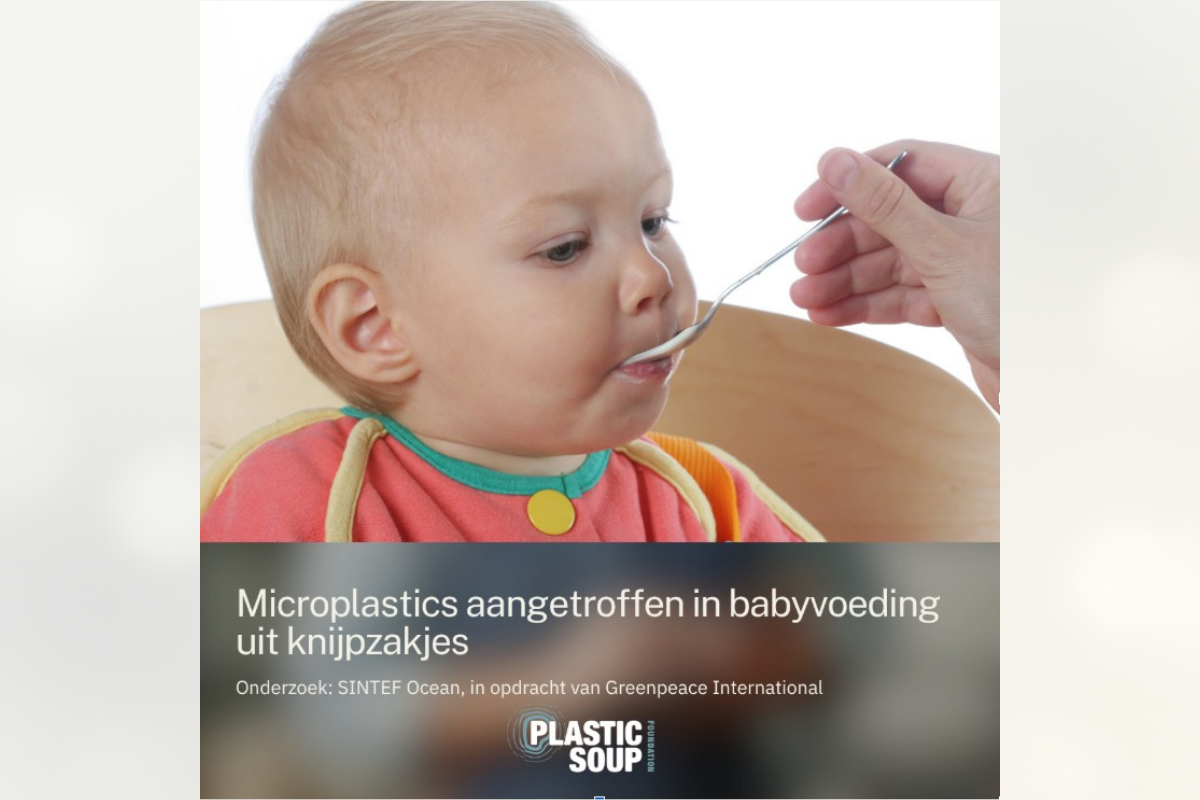
Baby food sold in plastic pouches by Nestlé and Danone contains microplastics, according to new research conducted by the Norwegian research institute SINTEF Ocean on behalf of Greenpeace International. The findings raise new questions about the role of plastic packaging in human exposure to microplastics.
Researchers analyzed products from Gerber, a Nestlé brand, and Happy Baby Organics, owned by Danone. Microplastic particles were detected in all samples tested, with some products containing thousands of particles per pouch. Some of the particles matched the type of plastic used in the packaging itself, suggesting that the packaging may be a source of at least some of the contamination. Researchers also detected several plastic-associated chemicals.
Vulnerable group
Plastic squeeze pouches have become one of the most popular packaging formats for baby food in recent years, replacing traditional glass jars in many countries. Their convenience has made them a daily staple for millions of families.
Calls for safer packaging
Following the publication of the study, Greenpeace International called on baby food manufacturers to investigate potential sources of contamination and accelerate the transition to reusable and plastic-free alternatives. According to Greenpeace, plastic pouches are not only difficult to recycle, but may also contribute to babies’ exposure to microplastics and plastic chemicals.
Babies and young children are considered particularly vulnerable to chemical exposure, and concern about the potential effects of exposure during early life is growing. Plastic Soup Foundation supports Greenpeace’s call and stresses the importance of protecting children from unnecessary plastics and hazardous chemicals.


_(1).png)