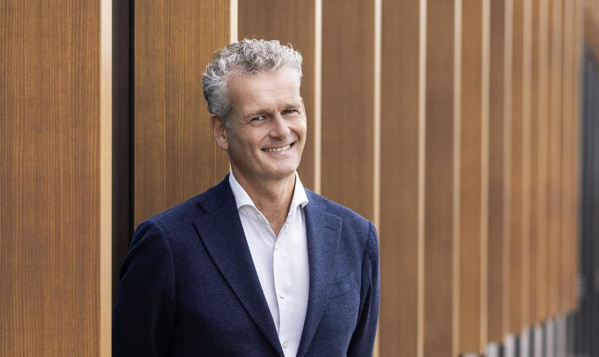


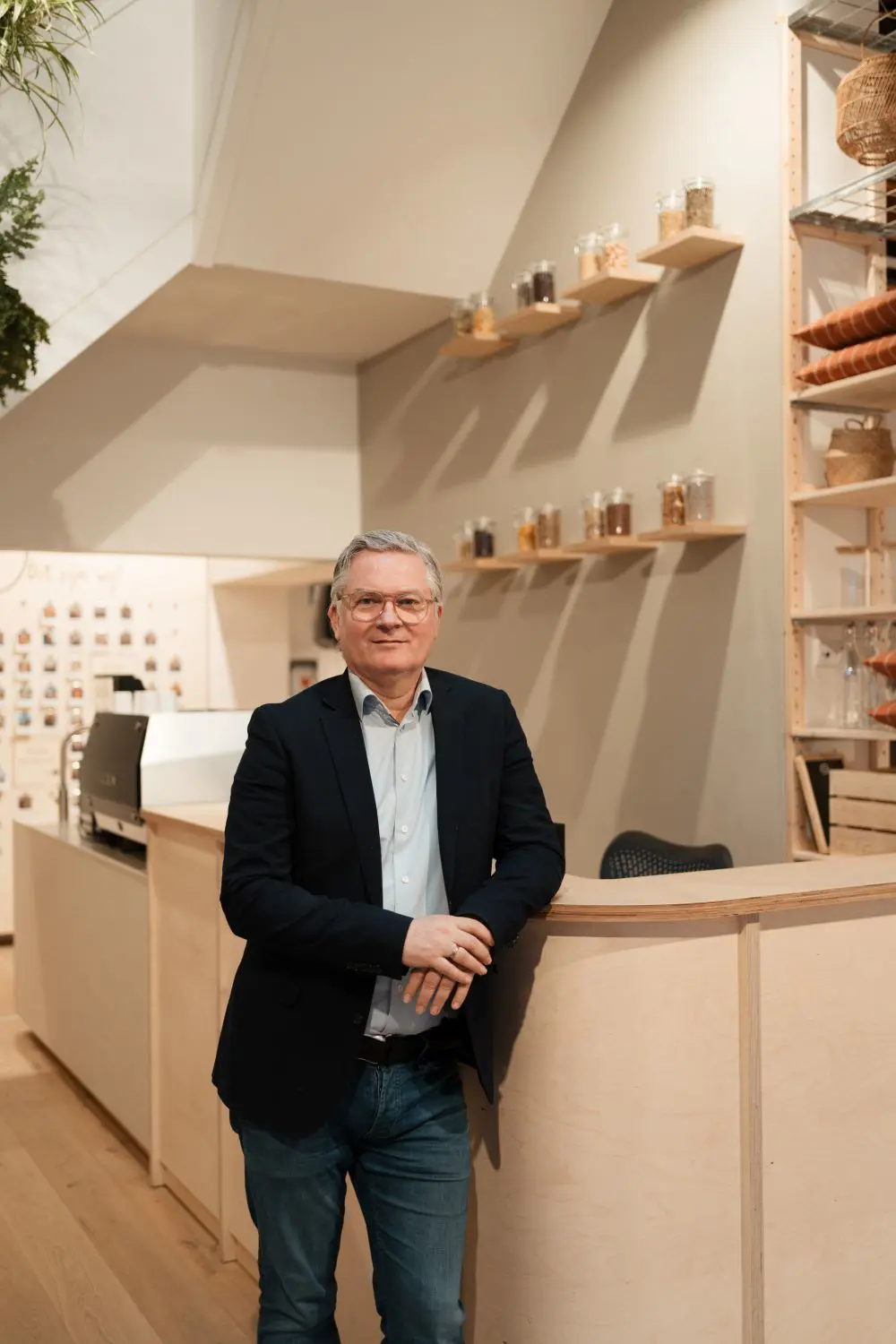
Could you briefly introduce yourself and explain your role within the organization? My name is Hans Geels and I am the Managing Director of Dille & Kamille. I am responsible for the strategic direction of the company, where sustainability, simplicity, and conscious choices are central to everything we do.
What does your organization stand for regarding sustainability and plastic reduction? Dille & Kamille stands for timeless products that contribute to a conscious way of living. Sustainability is not a recent development for us; it has been in the company’s DNA since it was founded in 1974. Plastic reduction is a key part of that vision. Wherever possible, plastic is avoided in favor of natural, reusable materials such as wood, glass, and metal.
You are participating in "Plastic-Free May" (Mei Plasticvrij) together with the Plastic Soup Foundation. Why this collaboration? We collaborate with the Plastic Soup Foundation because they have played a vital role in raising awareness about plastic pollution for years. Their mission aligns perfectly with what we stand for as a brand. Together, we can make a greater impact than we could alone.
In your opinion, why is collaboration between NGOs and retail essential to make a real impact? Retail has direct contact with the consumer, while NGOs often bring in-depth knowledge and a sense of urgency. By joining forces, you can both inform the public and provide immediate ways for them to take action. This makes change concrete and scalable.
What concrete steps have you already taken to reduce plastic in your stores and supply chain? We have built our assortment largely out of products that are either plastic-free or have a long lifespan. Additionally, we have reduced packaging, opted for plastic-free alternatives whenever possible, and encouraged reuse—for example, with refillable products.
Where do the biggest challenges still lie? The biggest challenge is in the supply chain: not all suppliers and logistical processes are fully plastic-free yet. We continue to take steps in that direction, but it requires time and cooperation.
As a retailer, how can you inspire consumers to use less plastic? By making it easy and attractive. We show that there are high-quality alternatives that are beautiful, practical, and affordable. Inspiration in-store and online plays a major role in this.
What are you noticing: is the consumer ready for this, or do we still need to change a lot? We see that awareness is growing, but there is still work to be done. Many people want to change but are looking for convenience and clear choices. This was also evident from recent research we conducted among our members. 86% indicated they want to use less plastic, yet 70% still use it several times a week or even daily. The main reasons: convenience and price. As a retailer, we can help with that.
What can customers concretely expect from you during the Plastic-Free May month? During Plastic-Free May, our campaign specifically focuses on the kitchen. This is pre-eminently the place in the home where a lot of plastic enters and is used daily, often without us being truly aware of it.
We show that things can be done differently by offering practical, plastic-free alternatives and inspiring customers with tips, facts, and simple DIYs. Think, for example, of replacing a plastic dish brush with a wooden version with natural bristles, or using a dish soap bar instead of a plastic bottle. We also show how you can make your own products, such as dish soap.
Furthermore, we find it important to emphasize that change doesn't have to happen all at once. By making small adjustments step by step, you can already make a big difference in reducing plastic use.
How do you hope this campaign will touch or activate people? We hope people see that small changes can make a big difference. Once you start, you realize that a plastic-free lifestyle is more accessible than you might think.
What do you think is the biggest misunderstanding about plastic use and sustainability? That it is an all-or-nothing story. Many people think it has to be perfect immediately, whereas every step counts. Small adjustments collectively make a massive difference.
How do you see the future: can we work toward an (almost) plastic-free retail sector? I believe we can certainly move in that direction, but it requires commitment from the entire chain: from producer to consumer. It is a gradual process, but the direction is clear.
What can other companies learn from this collaboration? That collaboration really pays off. By sharing knowledge and reinforcing one another, you progress much faster than you would alone.
How can more organizations join or contribute? By taking a conscious look at their own processes and partners, and by seeking collaborations with organizations that already have expertise in this field.
What is your call to action for other entrepreneurs and consumers? Don't keep waiting for the perfect solution; start today. Every step toward less plastic counts, and together we can make a real difference.


.png)