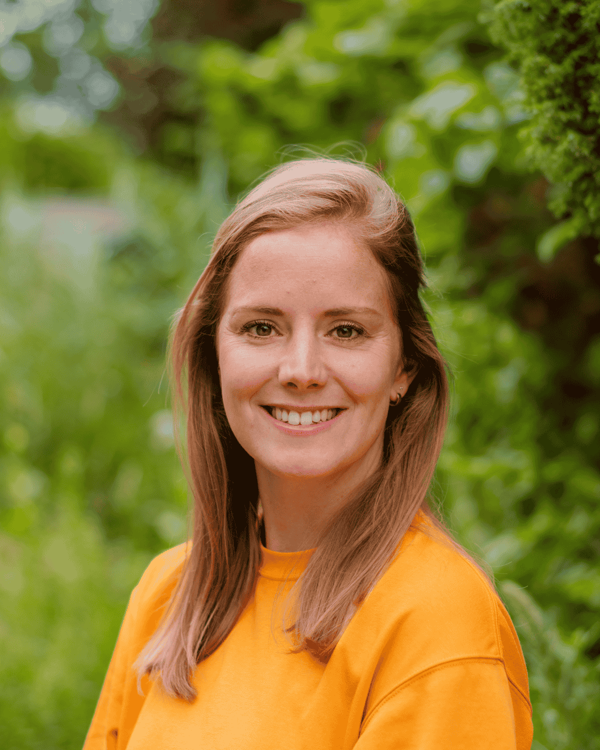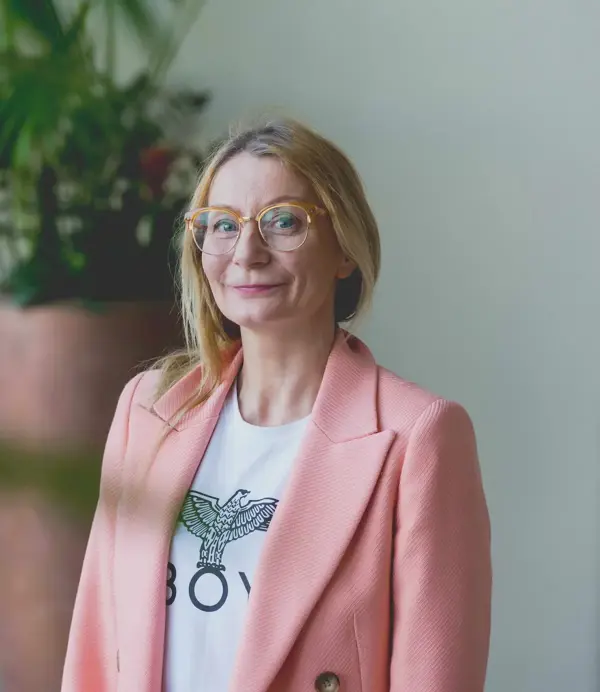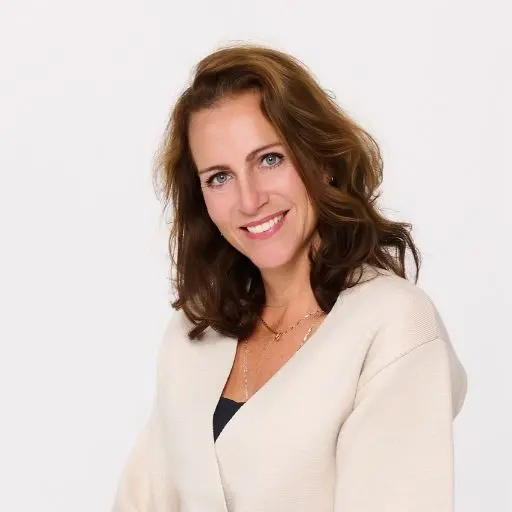


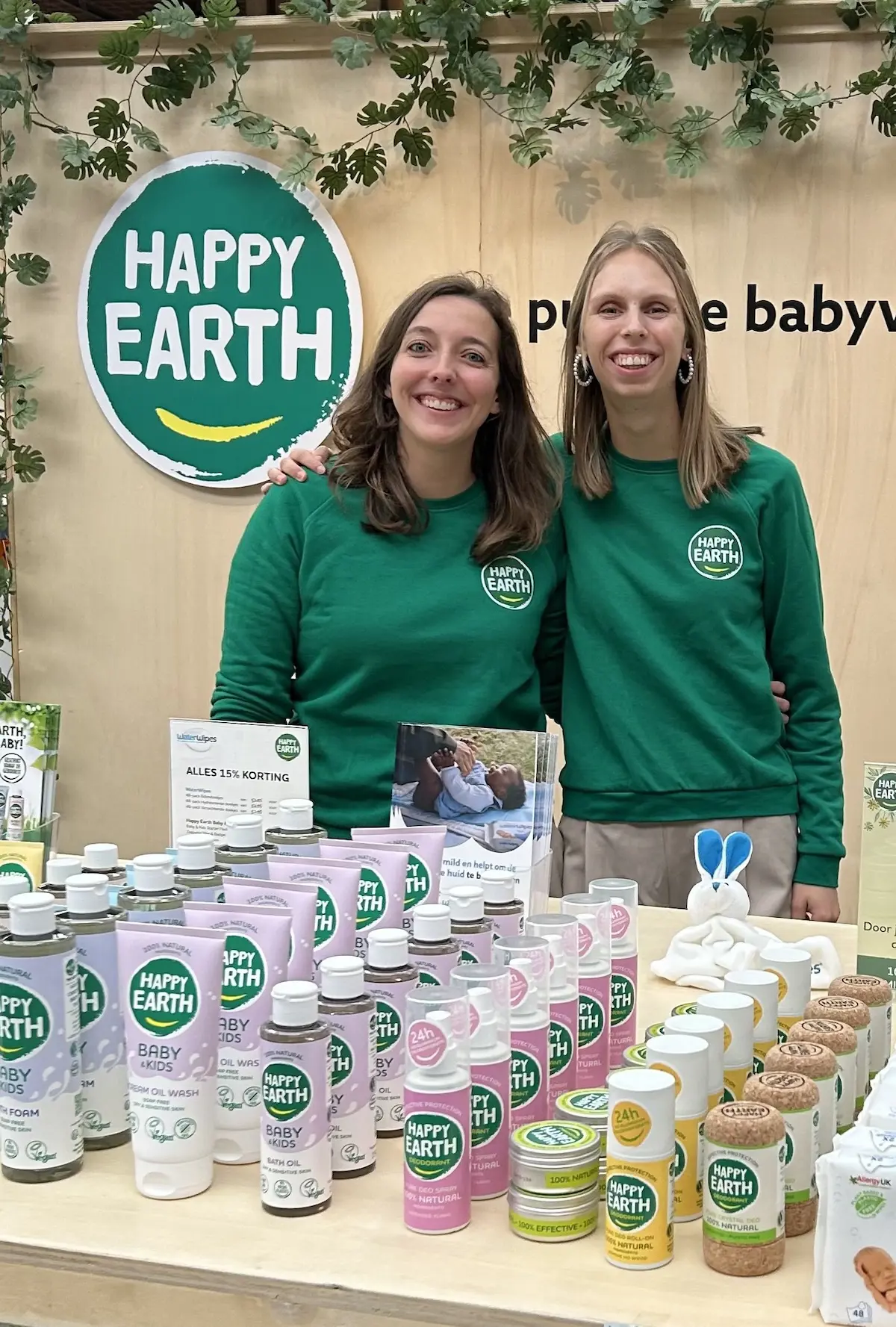
Could you introduce yourselves? Veerle & Carly
We are Veerle and Carly, and together we are responsible for marketing and product development at Orange-Sheep B.V. / Happy Earth. Every day, we work with great enthusiasm to develop beautiful, sustainable products and introduce them to the Netherlands. Veerle has been with Orange-Sheep for four years and Carly for two.
Could you briefly tell us about the history of Orange Sheep/Happy Earth?
Orange-Sheep B.V. was founded almost 10 years ago by Niels and Martijn, who both have backgrounds in large FMCG companies. Driven by a desire to do business more sustainably and to have the freedom to make better choices, they founded Orange-Sheep. Orange-Sheep B.V. comprises two brands: Happy Earth and WaterWipes. Happy Earth is our own 100% natural personal care brand, and we are the exclusive distributor in the Netherlands of WaterWipes baby wipes.
What is Happy Earth doing to reduce the global plastic footprint?
Happy Earth brings joy and optimism with the best products for you and the planet. The wide range includes deodorant, shower gel, hand soap, baby care, bars, body care and maternity care. We use only 100% natural ingredients that are independently certified. The products are vegan, microplastic-free and free from harmful additives. In addition, the packaging is as sustainable as possible: completely zero-waste, plastic-free, tubes made from sugarcane or 100% recycled plastic. We source this packaging as locally as possible and manufacture all our products in the Netherlands using green energy. For us, the right ingredients, packaging and production methods are essential in everything we do, and in this way we also contribute to reducing our plastic footprint.
Why is this so important?
Plastic pollution is one of the most persistent environmental problems of our time. Fortunately, there are already many good alternatives available today! We hope that more and more companies will not opt for the cheapest or easiest option, but will critically assess their environmental impact and take steps to improve it. That is why we have been a partner of the Plastic Soup Foundation for some time now, working together to raise awareness and bring about behavioural change.
What appeals to you most about sustainable entrepreneurship?
Veerle: Before I joined Happy Earth, I worked at FrieslandCampina for several years. After this valuable experience at a large multinational, I found myself increasingly drawn to work where I could make a direct difference. Working at a smaller company with a strong mission where we have a genuinely positive impact gives me a lot of energy.
Carly: After graduating, I made a conscious choice to join a company that makes a real impact. It feels important to me to be part of a company that looks beyond profit and contributes to a better world.
What advice would you give to other entrepreneurs who want to operate more sustainably?
Start with a specific problem you want to solve, such as microplastics in personal care products. By working from that starting point, you can build solutions step by step that are not only more sustainable but also make a real impact. And keep asking questions! Often, with a bit of creativity and perseverance, much more is possible than you might think at first glance.
What do you personally do to reduce your plastic footprint?
Veerle: I’m critical of the products I buy and opt for plastic-free alternatives wherever possible.
Carly: I consciously choose reusable products, watch out for microplastics in personal care products, and these days I try not to buy plastic clothing anymore.
What simple sustainability tip do you often share with others?
It might be stating the obvious, but switch to 100% natural and microplastic-free personal care products, such as Happy Earth! By no longer choosing traditional products that often contain unnecessary and polluting ingredients, you can make a big impact with small changes.
What is your vision for the future in this area?
We expect microplastic-free personal care products to become the norm rather than the exception. We also see it as a positive development that consumers are becoming increasingly critical, forcing manufacturers to be ever more transparent. Hopefully, this will lead to fewer vague sustainability claims with no basis in fact and more products with a genuine story behind them.
How do you view the focus on CO₂ reduction versus plastic pollution?
These are both very important issues and closely interlinked. A sustainable strategy therefore does not focus on a single aspect, but seeks solutions that reduce both CO₂ and pollution. Our strength lies in reducing plastic and developing more sustainable alternatives. That’s where we make a difference. At the same time, we also take responsibility for our carbon footprint and continue to seek improvements throughout our entire supply chain.
What is the biggest misconception about sustainability that you’d like to correct?
A major misconception regarding sustainability, particularly in personal care, is that products are automatically sustainable simply because they are marketed as such. We see a lot of greenwashing: attractive claims, but limited actual impact. You should therefore always look for certification labels, such as NATRUE, check the ingredients and use apps, such as PlasticFreeFuture, to verify whether a product is genuinely microplastic-free.
What should people really know about plastic pollution?
Plastic pollution isn’t just visible as litter, but is also present in an invisible form as microplastics. These are often found in everyday personal care products such as shower gel, deodorant or hand soap. They wash down the drain into the environment, but can also come into direct contact with your skin and potentially be absorbed by the body. In this way, microplastics ultimately end up in our water, our food and even in our bodies. Plastic pollution is therefore not just an environmental problem, but also a health issue, and it starts with being aware of what you put on your body every day.
What are your objectives for the next 5 to 10 years, specifically regarding the plastic footprint?
We remain committed to our mission and to introducing consumers to our 100% natural products. Reducing the plastic footprint is an essential part of this. We continue to optimise our portfolio and seek alternatives to plastic.
.png)