


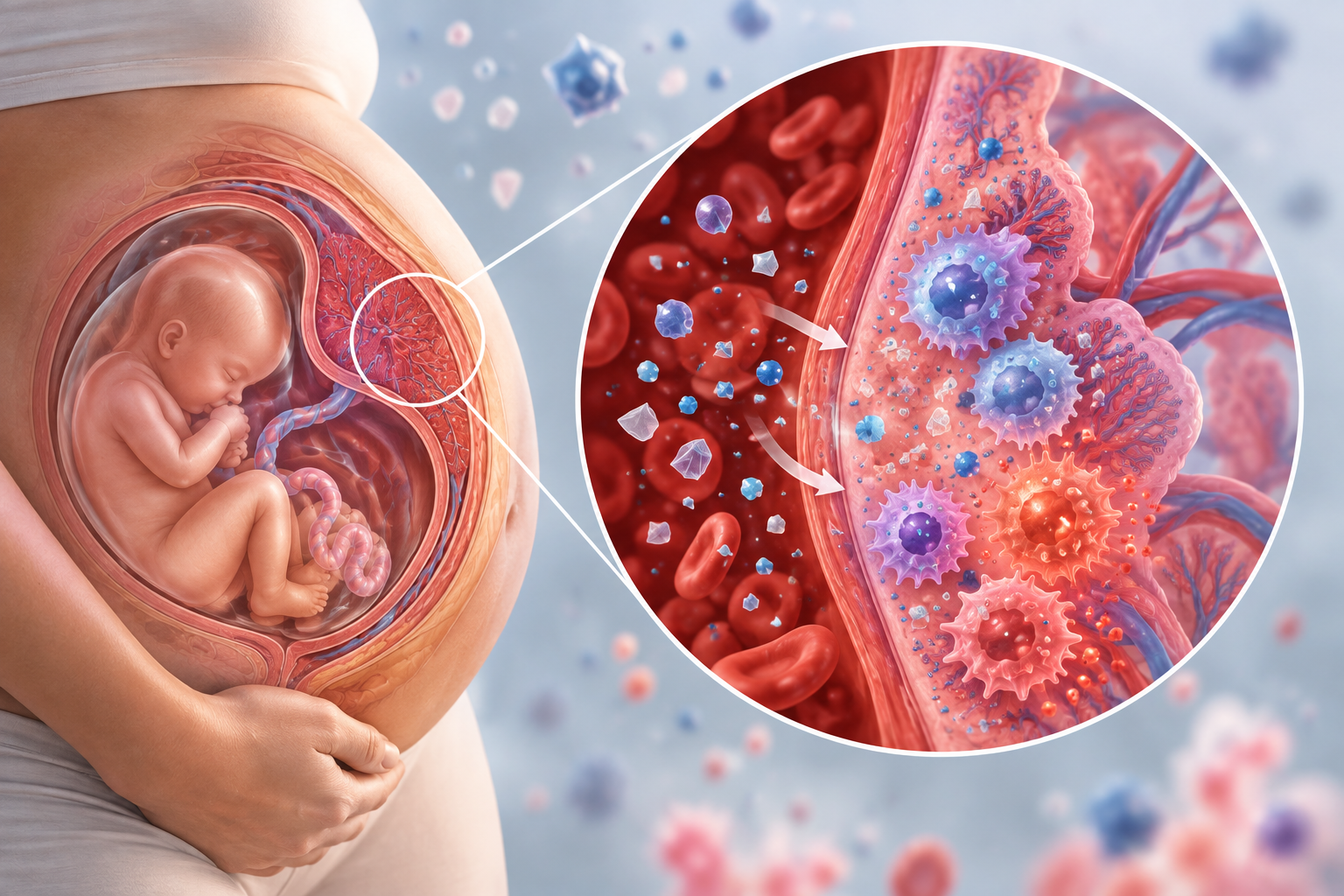
Researchers at Beijing Obstetrics and Gynecology Hospital, affiliated with Capital Medical University in the Chinese capital, investigated the effects of polystyrene on the placenta. Polystyrene is one of the most common types of nanoplastic found in the environment. These tiny particles have previously been detected in human blood, lungs, placentas and even umbilical cord blood, but until now, it has remained largely unclear what exactly these particles do once they are there.
Immune Cells Shift in the Wrong Direction
The placenta is not simply a passive gateway for nutrients, but a tightly regulated immune organ. Certain immune cells, known as macrophages, help maintain this balance. In their calm state, they promote tolerance between mother and fetus and support healthy blood vessel development. In their activated state, they fight off invaders but can also damage surrounding tissue. A healthy pregnancy depends on maintaining the right balance between these two states.
The researchers found that nanoplastic particles shift this balance towards the activated, pro-inflammatory state. In pregnant mice exposed to the particles, placental tissue showed clear signs of inflammation at the gene level. In additional experiments using human cell cultures, the researchers observed the same pattern.
One Gene as a Red Flag
One gene stood out in the data: ARG1. Across all experiments, its activity consistently decreased following exposure. This gene is a key component of the placenta’s inflammation-regulating immune programme. When ARG1 is suppressed, the placenta loses an important part of its ability to keep inflammation under control. According to the researchers, this suppression appears to drive the shift towards the harmful, activated immune state. They therefore consider ARG1 a reliable, measurable marker of this type of damage caused by nanoplastics.
Why This Matters
An inflamed placenta does not function as effectively. Previous research has linked this type of immune shift to pregnancy complications such as pre-eclampsia, a condition involving high blood pressure and protein in the urine, and restricted fetal growth.
An important caveat is that these experiments were conducted in mice and human cell cultures, not directly in pregnant women. The researchers themselves consider it plausible that the same mechanism may also play a role in humans, given similarities in immune biology across species and the fact that nanoplastics have already been detected in human placentas.
What Needs to Happen?
This study adds to a growing body of research showing that plastic particles can penetrate some of the most protected areas of the human body, including those surrounding vulnerable babies in the womb. As exposure to nanoplastics through air, food and water continues to increase, so too do the potential risks.
Plastic Soup Foundation therefore believes that protecting pregnant women and their unborn children from plastic particles should be given the highest priority. Do you believe governments should fund more research and tighten standards? Let your local authorities or elected representatives know: during pregnancy in particular, waiting for further research is no longer a neutral choice.